Who wrote the dances
The Strauss family and the waltz
Who the Strausses were and what you hear in the Hofburg: Johann II, the Waltz King, his brother Josef the engineer, and the programme's waltzes and polkas.
Reserve your seats in the Hofburg ↗Quick answer
Johann Strauss II (1825 to 1899) was Vienna's Waltz King, and his brother Josef (1827 to 1870) was an engineer turned composer. Between them they wrote the waltzes and polkas that fill the Hofburg programme, from Roses from the South to the Blue Danube.
A father and three sons
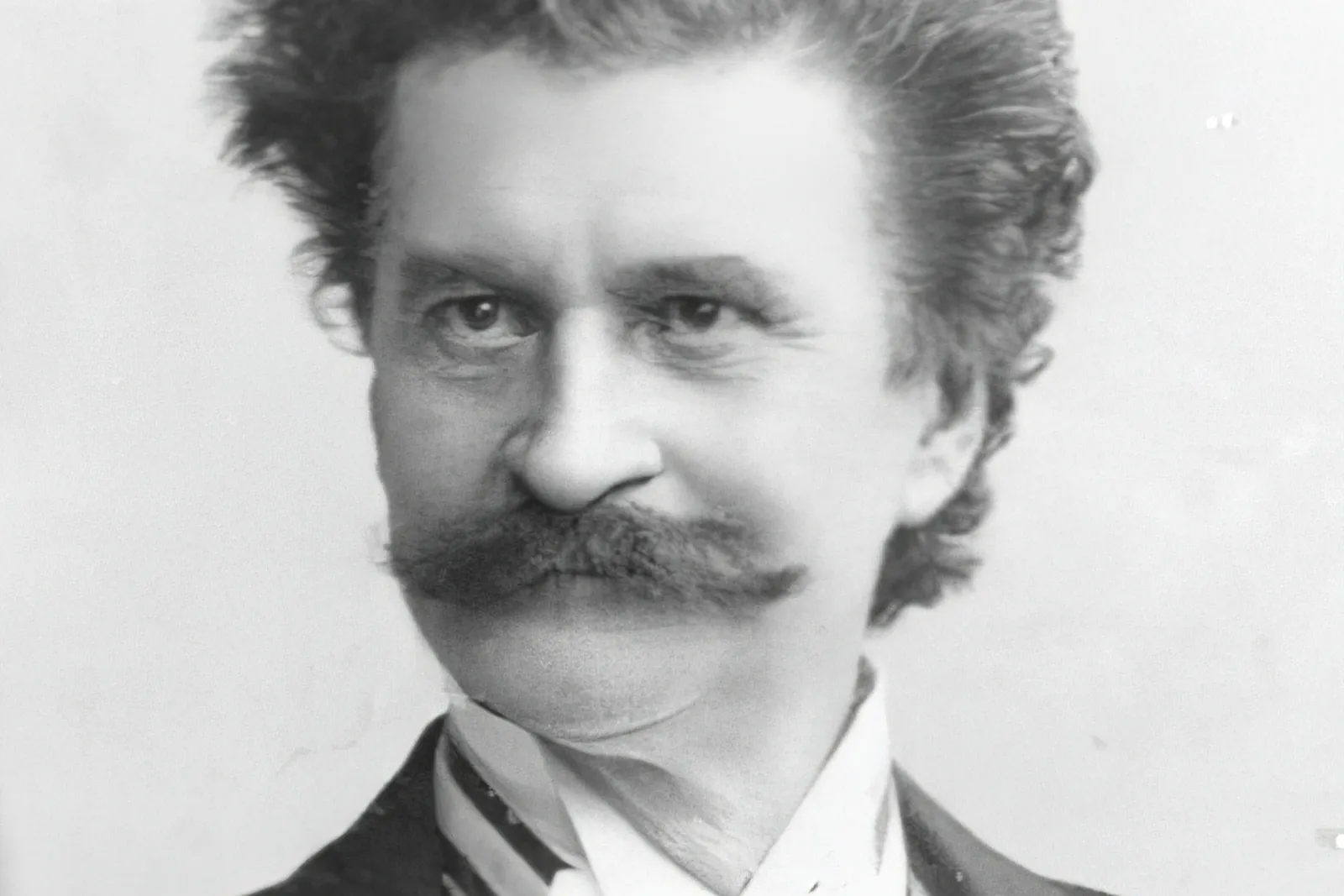
Johann Strauss I, the father, is credited by the orchestra's own site with co-creating the waltz in its present form together with Josef Lanner. His son Johann II was born on 25 October 1825, and Josef followed on 20 August 1827. Another brother, Eduard, joined as a conductor in 1862. The father opposed Johann II's wish to be a musician, while his mother Anne supported it. Johann II first performed with his own orchestra at the Dommayer Casino in Hietzing on 15 October 1844, without his father's consent, as the orchestra's own history of the family records.
Johann II, the Waltz King
Johann II won the nickname the Waltz King in his lifetime. He became Hofballmusikdirektor, the director of music for the court balls, in 1863 after being refused the post several times. His waltzes include The Blue Danube, Tales from the Vienna Woods of 1868, the Emperor Waltz of 1888 and Roses from the South of 1880, and his operetta Die Fledermaus of 1874 became the most performed operetta in the world. He died on 3 June 1899 in Vienna and is buried in the Central Cemetery.
Josef, the engineer
Josef trained as an engineer and worked for the city of Vienna, where he designed a horse-drawn revolving street-sweeping vehicle and published two mathematics textbooks. When Johann II fell seriously ill in 1853, Josef led the family orchestra and then chose to carry on the family trade. Johann is reported to have said that Pepi was the more gifted of the two and he himself merely the more popular. Josef's polkas Feuerfest and Ohne Sorgen, both of 1869, appear on the programme. He died in 1870, aged 42.
Waltz and polka
A waltz is in triple time, three beats to the bar, and it became fashionable in Vienna from around the 1780s. A polka is in two-four time and came from Bohemia in the early 19th century, reaching Vienna by 1839. The Strauss family wrote polkas of several kinds: the French polka is slower and more measured, while the polka schnell is fast. Listen for the difference on the night.
Josef's darker colours
The brothers did not sound alike. Josef's waltz Dynamiden, written in 1865 and subtitled Mysterious Powers of Magnetism, uses minor keys, which set it apart from Johann II's waltzes. His Delirien of 1867 and Sphärenklänge of 1868, the Music of the Spheres, show the same reflective streak. Johann is reported to have said that Josef was the more gifted of them. The programme leans on the lighter side of the family, with Josef's polkas Ohne Sorgen, Without a Care, and Feuerfest, Fireproof, which are playful by their titles.
What you hear in the Hofburg
The programme names Roses from the South, a waltz built from tunes of the operetta Das Spitzentuch der Königin, and the polkas Im Krapfenwaldl, Eljen a Magyar and Vergnügungszug, along with Josef's Ohne Sorgen and Feuerfest. It also names Wiener Blut, the title of a waltz of 1873 and of a later operetta, and it ends with An der schönen blauen Donau, the Blue Danube, which the Vienna Men's Choral Association first sang on 15 February 1867. The orchestral version made its name at the Paris World's Fair that year.
Who this isn't for
If you want a lesson in dancing the waltz, this is not it: the ballet dancers perform on the stage, and you stay in your seat. If you expect every famous Strauss piece in one evening, remember that the programme is subject to change and that the family wrote far more music than one evening holds. And if you want to hear the music exactly as it was played for the court, remember that this is an orchestra founded in 1971, playing a programme built for an international audience.
Frequently asked questions
Who was the Waltz King?
Johann Strauss II, born in Vienna in 1825 and died there in 1899.
What did Josef Strauss do besides composing?
He trained as an engineer and worked for the city of Vienna, where he designed a street-sweeping vehicle.
When was the Blue Danube first performed?
On 15 February 1867, as a choral piece sung by the Vienna Men's Choral Association.
What is the difference between a waltz and a polka?
A waltz is in triple time and a polka in two-four time. The polka came from Bohemia in the early 19th century.
Sources